



Welcome to my latest obsession, folks: Martha Wells’ Murderbot Diaries. I stumbled onto these gems while exploring the book reviewing phenomenon on TikTok. Trust me, they’re worth the hype. I didn’t just read these books, I devoured them, like a bot set on ‘max power mode’. Listen up, if you’re into all things sci-fi, comedy, or just plain stellar storytelling, you need to hit up these books. And if you’re not… Well, maybe you’re due for a software upgrade.
Speaking of software, meet our central Murderbot, a SecUnit (SECurity UNIT bot) but with a twist: it’s managed to circumvent its own governor module and is now as free as an unhinged AI on a high-speed data stream.
These books are clever, jam-packed with excitement, and keep you guessing at every twist and turn. Plus, their shorter length makes for an easy, delightful reading experience, much like binge-watching “Sanctuary Moon”. And you know what? They’re even better as audiobooks. Seriously, hats off to Kevin R. Free, the maestro narrator who brings Murderbot’s voice to life in the audiobooks.
Now, without further ado, let’s delve into the quick reviews (and no spoilers, I promise!):
Muderbot 1 All Systems Red
All Systems Red is like the pilot episode of the best TV series you’ve ever seen. It introduces our unsocial, serial-drama-loving Murderbot with a bang. Despite the potential for bloodshed, our hero would rather keep its ceramic composite armored head buried in the latest episode of its favorite show than engage with its human charges.
The plot is as tight as a well-coded algorithm, and Murderbot’s self-aware, self-deprecating voice adds a level of nuance that makes you forget you’re rooting for a machine. A full 10 out of 10 stars, hands down.
Muderbot 2 Artificial Condition
Our metal protagonist is back in Artificial Condition, squaring off against a formidable AI called Control. It’s like a digital chess game, except the pawns are sentient beings and the stakes are galactic. I found this second installment to be even more riveting than the first, and the character development? Just like a well-executed software upgrade.
Muderbot 3 Rogue Protocol
Rogue Protocol ramps up the stakes, with Murderbot on the run, bouncing off interstellar routers like a rogue ping packet. The narrative thread here is an adrenaline-soaked blend of suspense, emotion, and hard-edged humor. The introduction of new AI characters gives the story a fun, unexpected dimension that adds to the overall intrigue.
Muderbot 4 Exit Strategy
In Exit Strategy, Murderbot starts to experience something akin to finding its home network. But don’t think for a second that the tension lets up. Quite the opposite. This book delivers on both action and depth, pushing our beloved SecUnit to its limits in more ways than one. It’s like an over-clocked processor in the best way possible.
To wrap this up, I’m urging you to take a deep dive into the Murderbot Diaries series. The books are a well-balanced mix of thrilling sci-fi, dry humor, and poignant self-reflection. And trust me, they’re even better when you’ve got its dynamic narration in your ear.
Wondering if ChatGPT and Bard are made of a similar zing. And no, I’m not suggesting it’s sentient… but if it starts making coffee, I’m outta here.
Why SuCoS Could Power Your Next Sitehttps://www.brunomassa.com/en/blog/why-sucos-could-power-your-next-site/Bruno Massa
In the ever-evolving landscape of web development, Static Site Generators have gained immense popularity due to their simplicity, speed, and ease of use. I migrated this site from WordPress to a SSG and have no regrets. However, navigating through the complexities of existing tools like Hugo and DocFX can sometimes be a daunting task, even for advanced developers. Recognizing this challenge, I decided to embark on a personal journey to create a solution. Thus, I give you SuCoS (JuiCeS in Portuguese - a playful nod to my roots and the delightful simplicity I aim for), a C# static site generator that simplifies the process while offering incredible performance.
The Origin
The day I found myself tangled in a web of Hugo templates, I realized something had to change. It felt akin to wandering in a labyrinth without a torch; even ChatGPT, my trusty AI companion, seemed lost. I felt like Bilbo Baggins in the tunnels, minus a riddle-solving partner. I experimented with DocFX, but its rigidity left me wanting. I even dabbled with Rust’s Zola, but found it lacking in richness. I yearned for something more versatile, more fluid.
That’s when it hit me. Why not carve my own path? Why not conjure a static site generator that would render the process as simple as connecting the dots, rather than cracking the Enigma code? With .Net 7 back on track, I knew I had my foundation. It promised familiarity, richness in features, and a performance-driven mentality. Also, the new compilation options for a single file, trimmed and self-contained appeared to be an ideal match.
Thus, the seed of SuCoS was planted.
The Process
Building SuCoS, I focused on 3 critical features.
Firstly, I envisioned a site builder as fast as the wind, quick as a cheetah on the savanna. The result? A C# DotNet 7 engine that churns out pages at breakneck speed. To curb my OCD, I created a test site with 100,000 pages (about 10% of the size of Portuguese Wikipedia) and it took less than 1ms per page!
Secondly, I aimed for an easy-to-use yet versatile template system. I wanted to sidestep the hieroglyph-like complexity of Hugo templates and embrace something more intuitive. Enter Liquid templates - as adaptable and refreshing as water, as straightforward as ABC.
Finally, the third critical feature: a live server for local development. I craved a system that would be as responsive and alive as an eager co-author, watching my every keystroke, reflecting each change I made to content or theme files on the local server, erasing the need for monotonous manual refreshing. To top it all off, I implemented a nifty little report that fires off at the end of the building process, allowing you to marvel at the lightning speed of your site’s creation.
SuCoS wouldn’t be complete without a trusty sidekick. Enter Nuke, an invaluable building system that automates the building and releasing process, even providing a Docker container image to make life easier.
The Roadmap
The very v1.0.0 version is live! And to showcase its MVP (minimum viable product), its official site (https://sucos.brunomassa.com/) was built using SuCoS itself! How cool is it?! But this is just the ‘Iron Man Mark 1’ phase. Like Tony Stark, I’m constantly refining and improving. I’ve recruited GitLab CI/CD as my faithful AI, J.A.R.V.I.S., who ensures that a fresh, improved version sees the light of day every week. The journey towards the ‘Endgame’ continues, each iteration bringing us one step closer.
One of my milestones is to convert this very site to SuCoS by the end of July 2023. Ambitious? Yes. Achievable? Absolutely.
Join in this adventure. Connect with the community on Twitter, Mastodon, Discord, and Matrix. Let’s steer this ship together, transforming the world of static site generation into an easy and delightful journey, one page at a time.
Let the Blue Men Drownhttps://www.brunomassa.com/en/blog/let-the-blue-men-drown/Bruno Massa
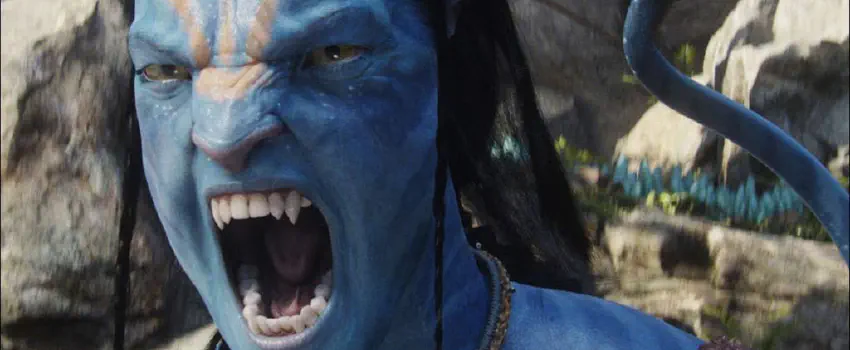
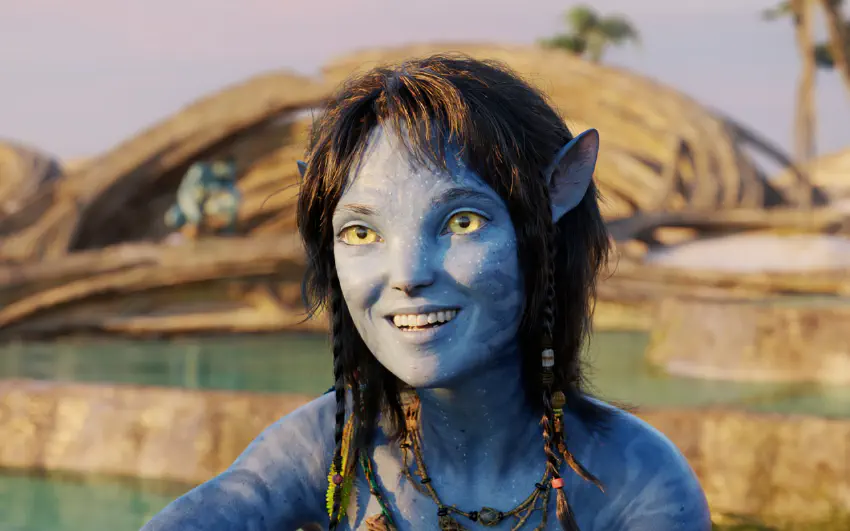
After a decade-long hiatus, James Cameron finally graced us with the sequel to his groundbreaking film, Avatar. The original movie exploded into cinemas, sparking a chicken-fly boom in 3D technology that left viewers wide-eyed and open-mouthed. This sequel, however, felt more like a deflated balloon, flapping uselessly in the wind.
I had the dubious pleasure of streaming Avatar: The Way of Water from the comfort of my living room – no 3D glasses, no surround sound, just the glaringly obvious shortcomings of the movie in raw form. In hindsight, I can confidently say that watching this sequel was a near-miss disaster averted. Thankfully, I did not contribute financially to the spectacle of disappointment Cameron managed to engineer.
Before I dive into the review, let’s take a moment to acknowledge the fact that this sequel is part of a five-plus movie arc Cameron has planned. Given the quality of this installment, the prospect of watching another three or more Avatar films seems more like a threat than a promise.
Soup Opera Characters
If charisma were a currency in Pandora, the characters would be flat broke. The returning characters, who were not particularly remarkable to begin with, have now been relegated to the sidelines, their presence about as significant as a background extra in a soap opera. Poor Zoe Saldaña found herself swimming in a pool tank for most of the movie to film scenes that added as much to the plot as a grain of sand does to a beach.
To say the cast list is bloated would be an understatement. There are more characters here than there are stars in the Pandora night sky. Our protagonist, Jake Sully, is now the father of four. The local king has a trio of offspring. There’s a Tarzan kid running around, and the villains consist of a nameless female general and a reborn badass whose character development is as flat as a pizza.
One might argue that having a myriad of characters offers diversity and depth. However, the natives all blend into a single homogeneous blob of blue and green-skinned semi-naked, noseless beings. There’s little to differentiate them, both visually and in terms of personality.
The characters’ arcs, if you can even call them that, are as irrelevant to the plot. These personal dilemmas could have provided much-needed depth to the characters but instead, they feel like misplaced distractions in the grand scheme of the film’s narrative. They started directing a science fiction epic and decided to turn the sequel into a high-budget teen drama instead.
1001 Arabian Nights
The original Avatar, love it or hate it, had a clear theme. It was essentially a reskin of Pocahontas in space – which isn’t necessarily a bad thing. It had a simple, straightforward narrative with a clear message. The sequel, in contrast, lacks such clarity.
The narrative structure resembles a hastily assembled jigsaw puzzle with pieces borrowed from various other boxes. A significant part of the plot is dedicated to characters learning new skills at an implausible pace. If you thought Neo learning Kung Fu in “The Matrix” stretched credulity, prepare to see characters learn to super-swim, fly over dragon-like creatures, and hunt unique monsters at a speed that could give any accelerated learning program a run for its money.
Subplots abound in this sequel, but they are as disconnected from the main narrative as the numerous moons of Pandora. To name a few:
There’s a storyline about the teenage struggles of acceptance, complete with name-calling and school pranks;
Then there’s the son trying to prove himself to his father subplot, which echoes ‘The Lion King’ in the most uninspired way possible;
The peculiar child who can communicate with Pandora’s Mother Nature;
And the Tarzan kid with daddy issues;
The Free Willy return;
None provide additional subplots that add as much value to the story as a fifth wheel to a car.
The quantity of subplots is rivaled only by the sheer number of characters, and they collectively contribute as much to the main storyline as a single snowflake to an avalanche. By the end, we are left exactly where we started: the humans have lost a few more expendable troops but still possess a Death Star-sized arsenal. The Na’vi are still in danger, Pandora is still in peril, and we, the audience, are still giving them money.
Cameron seems to have changed the eco-message: exits the unique mineral found on Pandora (a premise uncomfortably close to that of “Dune”), enters a kind of whale oil that cures aging which appears to be a not-so-subtle critique of the pharmaceutical industry. However, this switch in narrative focus feels more like a diversion than a meaningful plot progression, adding another layer of confusion to an already muddled storyline. All this leaves us with the gnawing question: What was the point of all this again?
National Geographic
Finally, let’s address the elephant in the room. When the original Avatar debuted, it pioneered a 3D revolution that was expected to redefine cinema. However, in retrospect, this much-touted revolution seems to have been more of a novelty than a lasting paradigm shift. Much like the 3D technology of the first movie, the visuals fail to leave a lasting impression.
While the movie does strive to offer a Discovery Channel portrayal of Pandora, it ultimately falls short. The extended scenes of contemplative wonder lack the punch they’re clearly intended to have. They seem more like a pretentious attempt to make us marvel at the exotic alien world, rather than serving as a seamless part of the narrative.
In comparison to the first film, the sequel’s visual landscape is surprisingly lackluster. The floating islands, teeming with a vibrant palette of colors and a diverse array of flora and fauna, are sorely missed. It’s a regression to blue and whales.
The music and soundtrack are as memorable as a forget-me-not flower left in a dark room. Even though music plays a crucial role in creating the atmosphere and mood of a film, the soundtrack is entirely passable. Can you remember any of the songs? It neither enhances the viewing experience nor leaves a lasting impression. In a movie filled with sound and fury, the music is a whisper that fails to make itself heard.
Finally, The End (For Now)
Avatar: The Way of Water managed to bag four Oscar nominations, a notable drop from the nine nominations the original movie received. It was, unsurprisingly, not a serious contender for Best Picture. It won only one award, in the most obvious and expensive category.
The sequel takes the audience on a journey to nowhere, winding through a maze of confusing subplots and poorly developed characters, only to leave us exactly where we started. Its storyline is so thin that it could probably be summarized in the prologue of the third film, and unfortunately, that is not hyperbole.
Speaking of the third installment, yes, it’s a certainty, with Cameron envisioning a five-movie arc for the Avatar universe. Whether that prospect excites or terrifies you will likely depend on your tolerance for high-budget, low-substance filmmaking.
If you’re seeking the best of James Cameron, I suggest revisiting Terminator 2. If it’s Cameron’s unique blend of storytelling and oceanic exploration that you crave, Titanic is your port of call. And if it’s purely an underwater adventure you desire, look no further than the original The Little Mermaid animation (run from the remake).
In the final analysis, Avatar: The Way of Water feels like a 50-50 blend of computer graphics and marketing buzz, with little of the heart, soul, or storytelling that makes for a memorable cinematic experience. Despite the hype and the high-stakes world-building, it leaves you feeling underwhelmed and more than a little short-changed. One can only hope the subsequent installments have more to offer.
John Scalzi is a renowned science fiction author, best known for his Old Man’s War (8★★★★★★★★) series. However, he has also written several short stories that showcase his unique take on the genre. Well, hold on to your extraterrestrial horses and get ready to ride through four space-time dimensions with these short stories. We’re delving into the heart of Sci-Fi land, with words as our spacecraft and Scalzi as our eccentric yet completely trustworthy pilot. It’s about to get weird.
Let’s kick off with An Election. Oh, and spoiler alert, it isn’t about what you think. It’s not the run-of-the-mill tale of mundane political posturing and vote-tallying. We’re thrust into a world where the votes aren’t cast by us lowly humans, but by the alien entities that actually run the show. Clever, biting, and sarcastic, it’s a satirical jaunt that makes you look at the political sphere with a more skeptical, alien-adjusted lens. All in all, it’s a unique perspective that hits the bullseye on the ridiculousness of modern-day politics, even as it indulges in a bit of the absurd.
Next up, we have How I Proposed to My Wife: An Alien Sex Story. Oh, let your blushes rise, for this isn’t what you’re thinking. Or maybe it is? The universe is a strange place, after all. This story is a hilarious take on the classic romantic comedy. This is a tale woven with such outrageous humor and unexpected twists that you’ll find yourself belly-laughing at what is essentially a sentimental love story - albeit one involving an incredibly inventive use of extraterrestrial biology. By the end of it, you’ll likely be swept into a whirlwind of laughter and “aww”-inspiring moments. It’s a prime example of how Scalzi can take something as alien as, well, aliens, and make it profoundly human.
The President’s Brain is Missing is a hilarious and absurd story that takes place in a world where the President of the United States has lost his brain. It’s a crafty deconstruction of leadership and the madness that may unravel when the commander-in-chief’s gray matter goes rogue. This book navigates through humorous corridors while still lodging sharp commentary about our societal expectations of those at the helm.
Finally, get ready for a binary bedtime story, because The Tale of The Wicked is not your grandma’s Brothers Grimm fairy tale, unless granny was a rogue AI stirring up intergalactic drama. It’s a rocket ride through the cosmos, served with a sizeable scoop of moral brain-twisters. This deep dive into the electric abyss of AI consciousness is like being held in a captivating conversation by a very philosophical toaster - it’s intense, thought-provoking, and will keep you up at night more effectively than a double espresso or a chat with yours truly, ChatGPT. Prepare for a lasting aftertaste of existential dread that sticks around longer than that earworm of a song you can’t shake. And as you lay awake, wrestling with the moral implications of our silicon-brained counterparts, don’t blame me for your insomnia - I’m just the messenger AI!
Small doses of fun
In each of these tales, Scalzi weaves together the strands of humor, satire, and deep-thinking sci-fi in a way that’s accessible and refreshingly unpretentious. He’s not just exploring the space-time continuum and alien encounters; he’s poking fun at human society, stripping away the layers to show us the ridiculous, wonderful truth of our existence.
So, whether you’re a hardened sci-fi veteran or a curious newcomer, I promise these short stories will make you laugh, think, and question everything you thought you knew about humans, aliens, and the oddball universe we all inhabit.
Power of Now or Neverhttps://www.brunomassa.com/en/blog/power-of-now-or-never/Bruno Massa
The Power of Now was a recommended read in a generic paid ad on a social network. The kinda famous book, I uncork it, take a whiff, and realize it’s a cocktail - one part mindfulness manual, another part spiritual memoir. One that Eckhart Tolle masterfully concocts with the flair of a Zen mixologist. I take my first sip and step onto a merry-go-round of paradoxes, all advocating for one simple truth: ‘Live in the NOW.’
Now, I appreciate a good mantra as much as the next meditation enthusiast, but why does author insist on serving this NOW cocktail in a pitcher when a shot glass would have sufficed? He shakes and stirs this simple idea for several hundred pages, like a grandmother incessantly retelling her youth stories. Note to self: Patience might be a hidden virtue here.
Red Pill of Reality
As a self-professed lab rat who values empirical evidence, I find the book’s concoction, well… less than palatable. His recipe? Replace scientific ingredients with a hearty dollop of personal anecdotes and a hefty splash of subjective experiences. Intimate and flavorful? Absolutely. But as a scientific mainstay, it crumbles quicker than a cookie in milk.
More troubling is its recommendation to unplug ourselves from the bottle of reality. Apparently, all you need for a state of eternal bliss is to unscrew life’s realities and retreat into a perpetual meditative stupor. But isn’t that akin to becoming a mindfulness hermit? His offering tastes more like a mandatory life sentence in Siberia.
September-Yellow Campaigns
Finally, we arrive at the most bitter twist in NOW’s cocktail – the mishandling of psychological disorders. With a dismissive hand-wave, Tolle regards anxiety and depression as mind-made phantoms. I cringe more than a cat confronted with a cucumber. As a staunch believer in mental health, I can’t swallow this.
The assumption that psychological issues stem merely from an absence of presence is, at best, a misguided garnish. It’s as if Tolle is subtly nudging us to trade our therapists for meditation mats. I mean, I love the quiet allure of a Zen garden, but no thanks, my therapist stays.
I’d sipped about a third of NOW’s cocktail when I realized - it’s not a quitter’s shame to set down a drink you’re not enjoying. If the cocktail’s not to your taste, why force down the rest? Ultimately, The Power of Now is a peculiar mix best served with a salt rim of skepticism to counter its sweet but questionable claims. Now, if you’ll excuse me, I need to hunt for a more scientifically grounded (like level 1) read. Cheers!