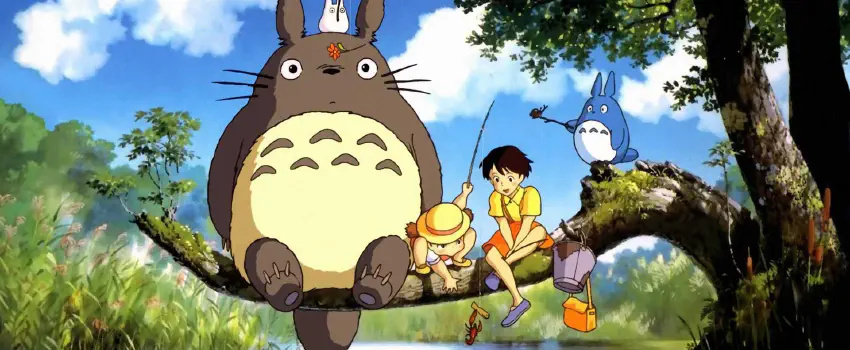
This Japanese animation showed me the importance of being open to alternative views. The theme and pace of the movie is completely different from the western animations.
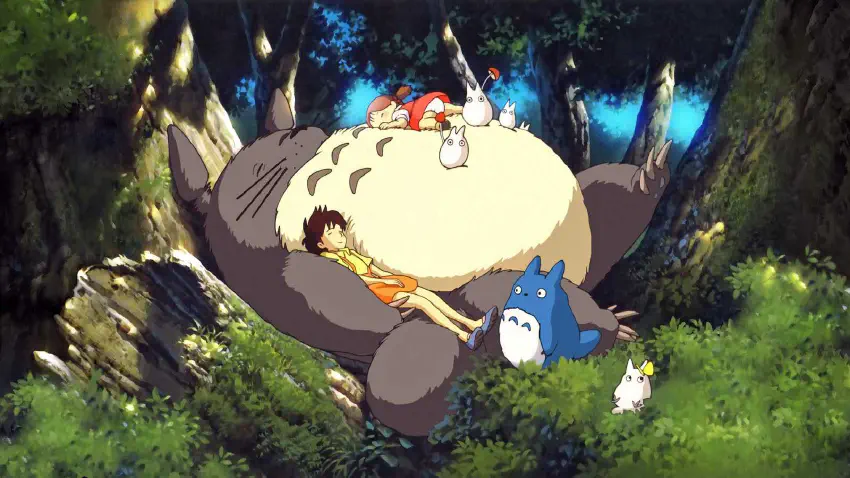
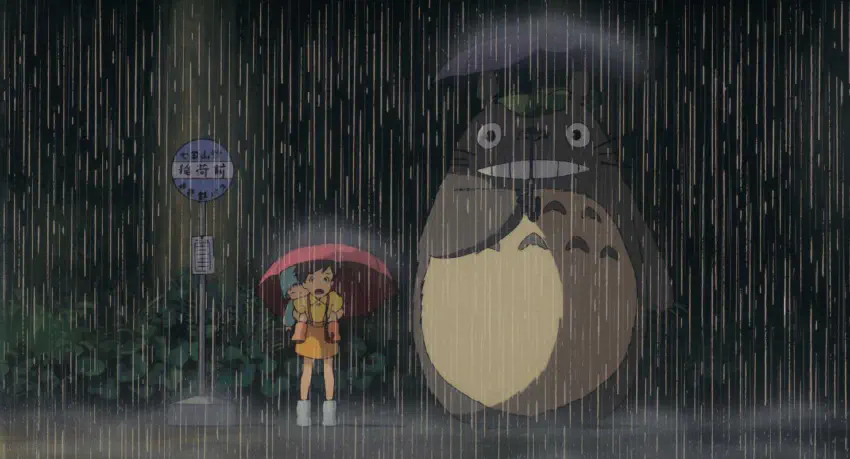
The story is about 2 girls (and their dad) moving to a new house. Nearby there are some fantastical creatures that co-exist in this world.
The pace is super slow. But not dragging-type of slow. It is contemplative kinda slow. They present the characters step by step, through small events. The two kids will slowly conquest your heart. They are so adorable. It was a great pleasure to care about someone, on the contrary of many of the western movies and games, that I could not care a thing about them. I loved Mei and Satsuki.
The visuals are great. Like watercolor paintings and classic anime style of drawings. The Totoro character is particularly funny! The other creatures are cool, but they are not thoroughly explored, so I cannot say they are great. The music is a bit sparse, with long moments of silence.
My mainly, maybe only, complain is the abrupt ending. With many spoilers, at a certain point of the story there is a big problem that the characters try to solve. But at any point it as said it was the major final concern. I was personally expecting to, after solving it, to get to this issue. It ends in moment that I was not expecting to happen. It left the story with too many open questions, too many mysteries. When the credits started to roll I was shocked.
It is a short excellent movie. It ends suddenly, but the whole ride is an enjoyable one. Totoro (the character) is now among my favorite anime characters ever.
[Edit: I pressed publish by accident. Some games added]
Length is an important variable for a video game. It is a bit curious, because for the similar prices, even the shortest game will be much longer than a movie. But among its peers, games do have a scale.
Many companies advertise the amount of hours to finish their games. There is even a great website called, you guessed it, GameLenghts that tracks how long users take to finish the game. There is a second site, and my favorite in the market, called How Long to Beat, that I feel more complete.
Bigger is not Better.
Most games suffer from a syndrome that most players never reaches the end of it. Sometime not even half of it. Many games do have achievements triggered when the player crosses the line. I currently have being playing some short games that I felt much more fulfilling. Some let me wanting more. But honestly I feel that wanting more is a better feeling “this game never ends!”.
I believe the story driven games should have a more concise length. It could be delivered in chunks, for those that want more. Open-world games, like GTA and Skyrim/Fallout, are understandably really long, allowing the players explore various things.
Here is a list of some games that I personally never finished.
Divinity Original Sin: this one I will finish soon. But it entered the list because I’ve played many games in the between.
(2)Skyrim: yes yes… I know. After not liking the previous installment, I came to this game knowing that I would struggle. After meeting The Witcher 3, it now seems likely to be played again
Borderlands 2: I played mechanically. Despite knowing that it is a nice game, I struggle to do it so brainlessly
(1)Bioshock Infinite: I started, I felt a bit fake and the story never hooked me
LA Noire: I am in a very late mission, but I think the saving I got is lost, so I might never finish it
(1)Dishonored: I started but soon uninstalled to open space to play The Witcher 3 expansions.
Transistor: I installed in my Linux notebook, but I rarely used to play games
Alan Wake: it’s a bit stressful to play. Also, I was not having time to play at night to fully appreciate it
(1)Half-Life 2: I always stop in a certain point than something happens that I move on
(1)Spec Ops: The Line: I played a bit and did not think it was amazing, but I feel it will surprise me
Amnesia: The Dark Descent: I loved the whole concept, but by the end of a session I feel exhausted because of the level of fear and stress.
In a list of more the 200 games I own and played, it is comparatively short list. Most of them are long games.
In bold, some that I try to play it again in the future, mostly because there are some that I liked so far, and I feel shame in not getting it to the final. I wanted to say that the others will be played in the future, but knowing that I will buy newer games, it is not honest with myself 😛
(1) Edited on 2021-09-20: Finished!
(2) Edited on 2023-03-09: Finished Skyrim at last!
Linux on Notebook, Take 2, Mini-Buntuhttps://www.brunomassa.com/en/blog/linux-on-notebook-take-2-mini-buntu/Bruno Massa
My notebook is not new. I bought the Yoga 2 Pro almost 4 years ago. Two years back, I got annoyed with Windows, so I decided to install Linux in it. I was scared because on the contrary of most my PCs that I assembled myself, the Lenovo had a warranty and possibly custom hardware.
As I told, the attempt failed. It was giving me too many headaches. Also, I generally use my notebook to also program and develop games. And because the Unity Editor was not available (not at least in a reasonable version), I was kinda forced to migrate back to Windows10.
About 3 months ago, I decided to give it a second shot. In case I was not clear, I use Linux in the desktop, in a dual boot, for about 15 years. I saw Ubuntu entering the market. But since I start to systematically be involved on making games, the necessity of Windows started too. Back to the experiment. It was a requirement for me that the general performance had to be great. Not good, great. I would prefer to keep on the Debian-like distro because I’m familiar to. Ubuntu family if possible. So I selected both Kubuntu and Lubuntu for a ride.
Kubuntu was the one that I tested before. I like KDE since version 2 but again failed in deliver a blazing fast experience. In the notebook, the boot time was several minutes. Even Windows 10 was a couple of seconds. I decided then to format and install Lubuntu.
Lubuntu is an Ubuntu derivative using the LXDE desktop environment. Super light. Man! Boot was fast and when ready it consumed a fraction of RAM of both Windows and Kubuntu. However, during my 4 weeks test I was giving too many little problems. So I decided to make another switch.
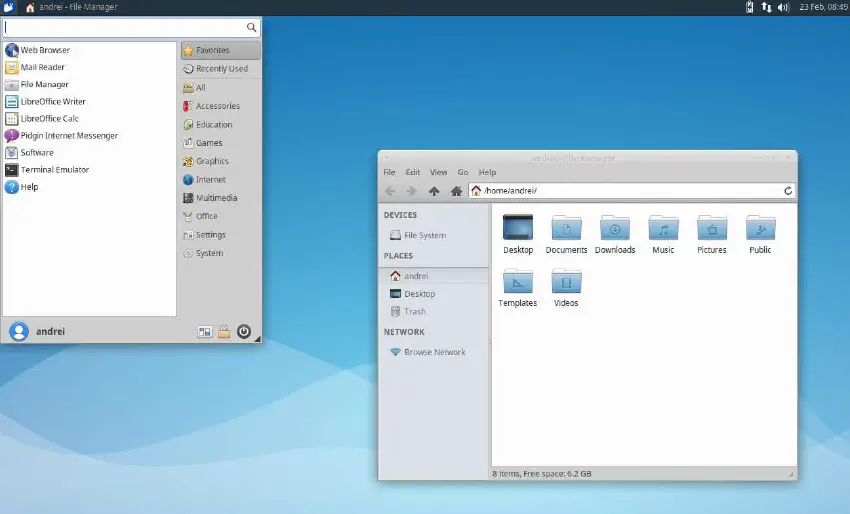
Xubuntu is fine in a 13 inches monitor. Then came to the software selection. Lubuntu was super short on preinstalled stuff, which I like because I generally don’t use them anyway, but Xubuntu came with some. The good news is that the selection does not consume much of the drive space and are light enough in case I really want to use them.
I had to install Steam and it works nice. Unfortunately, GOG’s Galaxy does not have currently a Linux version, so the games have to be installed manually one by one. Also, your play time will be not computed, nor you will be alerted about updates. A second negative point is that most GOG’s games do not use the new cloud save feature, so playing a bit in the notebook and a bit in the desktop is only for games that progress do not matter. Fingers crossed for the future.
Finally, I was looking for a game engine that works on Linux. Unreal, as I found, works, but you have to compile it yourself. GREAT 🙁 I did it. It took hours and the result was too many crashes and too big suite to work in a notebook. I was once again looking for a lightweight engine. I tested Godot and liked. But it is still lacking.
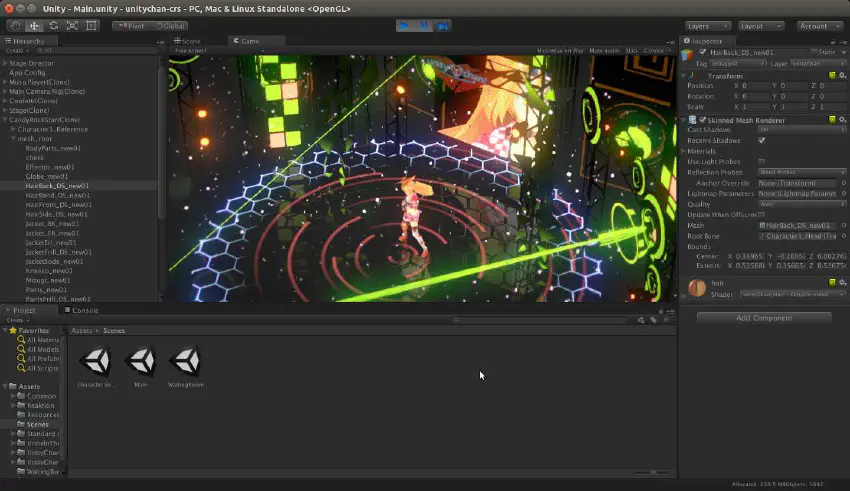
Then I found out that Unity is, in fact, releasing in an alternative channel (through forums) the update engine for Linux. I installed it too. Crashes a lot but it works. I’ve being playing the game developer in the notebook ever since. With the excellent Visual Studio Code editor, it makes my days fun.
After 2 months and half working most of the time on this notebook, I can be happier man but in general I am already one. It is fast, close environment that I face when I deal with cloud Internet stuff and free. I plan to migrate to a newer machine in the next year, mostly to get a better amount of RAM memory and battery life. Currently, it lasts 3 hours, which is by any means a shame for a mobile device.
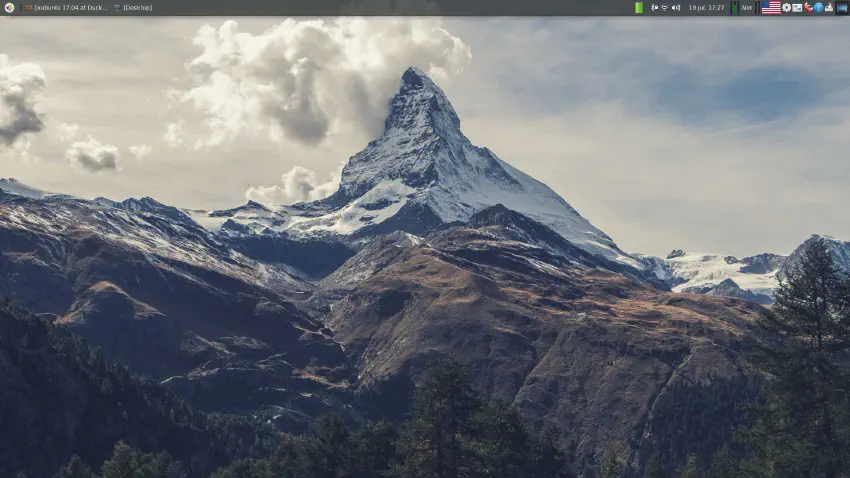
This is currently my desktop
Hacksaw Ridgehttps://www.brunomassa.com/en/blog/hacksaw-ridge/Bruno Massa
I wanted to watch the latest Mel Gibson movie as a director because… it was Mel Gibson. I understand that Gibson plays a nuts role in most peoples minds, but as a director, he is a quite talented one. I did not know much about the movie, except it was about a war (probably second great war, based on the trailer) and Gibson was the project leader. It was enough to make me curious.
After 30 minutes into the movie, I had to admit that I was hooked. Cool characters, cool story, very nice production.
Now, after seeing it entirely, I have to say: WOW. What a great movie it is! I was not expecting this quality.
Gore
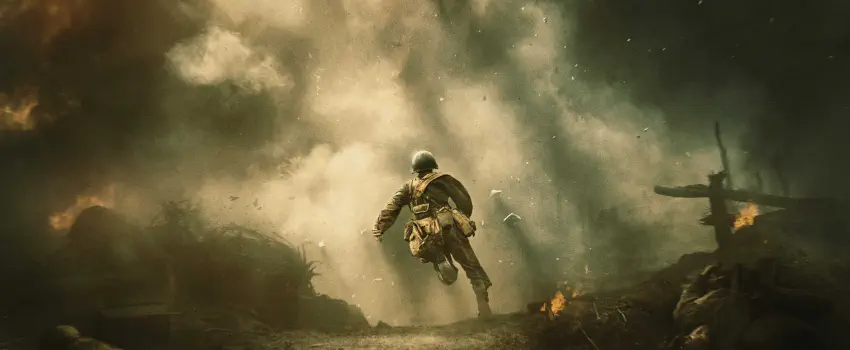
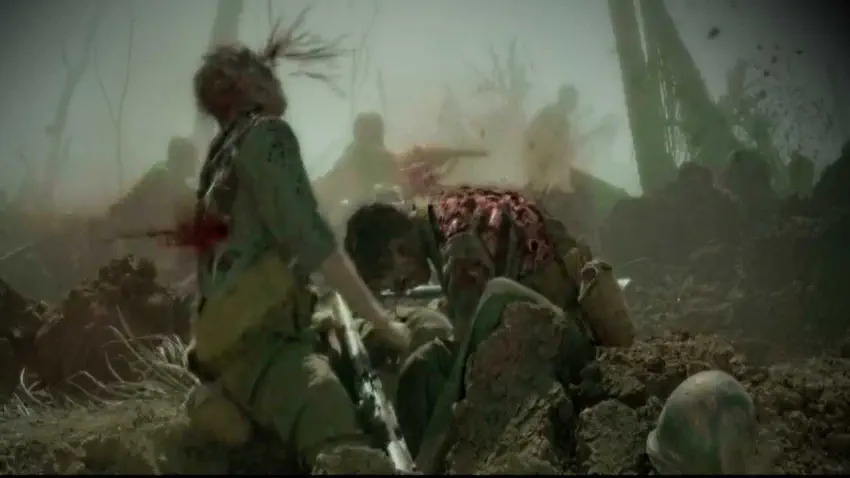
If you have heart problem, have kids with you watching or do not support violence and gore, keep away form this picture. It has it all. Like some super-realistic WWII movies (like the superb Saving Private Ryan), Hacksaw Ridge shows the battles in a visceral way. Gibson is very familiar with this, because Braveheart and Passion of the Christ are also displaying violence in its crudeness.
But for all of these movies, the crude violence is informative. It sets the tone of despair and importance of simple acts. You can see the real courageous and the cowards. The cost of the victory and the burden of the defeat.
Religion
One of the major themes is about religion prejudice. It dedicates half of its time talking about how the military (and society in general) are very prejudicial against religious people, especially those fanatics. It tries to convince that, despite the fanaticism, all people should be respected. Quite bold and powerful message in times that Muslim fanatics are doing so many terrorist acts.
But the political argument was not about Muslins, but about Gibson himself. It is well knowing that Mel is a very religious person. In the last past movies, he always touched the subject. Passion of the Christ and Apocalypto address some religions views and practices. I felt that Hacksaw Ridge, sometimes, seems to be made only for the purpose of justification of his own behavior and believes.
But despite the original intention a violent aesthetics, it is a must-see.
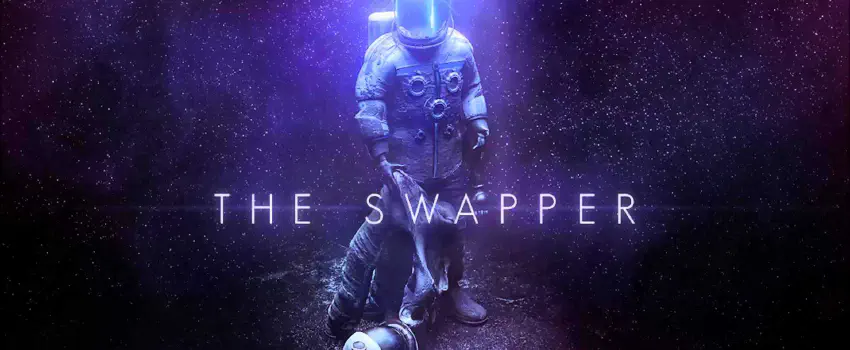
I bought The Swapper yesterday because I heard good things about it. And man, I loved the game.
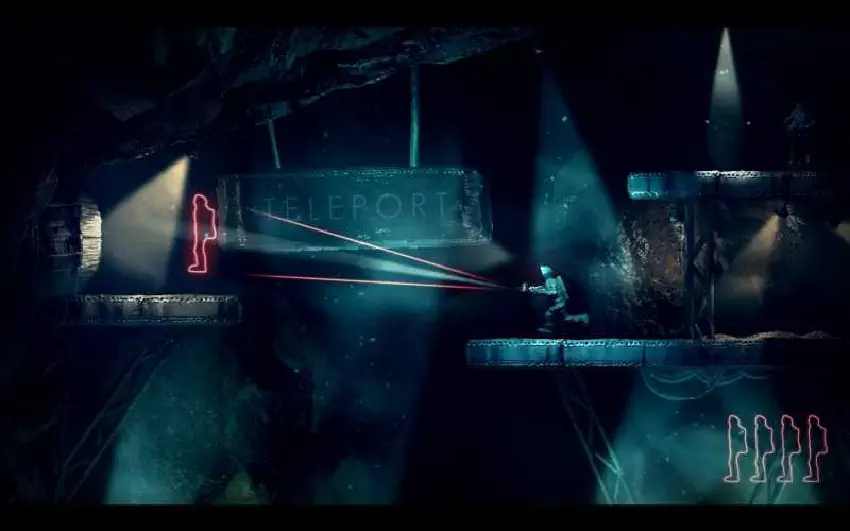
It is a platformer puzzle game, like the classic Braid, but the major feature is the ability to create a clone of yourself and migrate the controls to it. It might be considered a form of teleportation, but your old ones will still be there. It opens opportunities for several interesting challenges. It also uses, [minor spoiler alert] at mid-game, a similar feature as VVVVV that is changing the direction of gravity. The puzzles have a nice and steady evolution in difficulty, combining the new features each time they are added to your repertoire.
The only thing that I was a bit confused it the collectible orbs. For a completionist like me, and a pleasing game like The Swapper, I felt compelled to collect of them. But the counter that shows in the UI does not have a one-to-one relationship to the amount of orbs you collect. At the beginning of the game, it is one-to-one, but in later stages, each orb you get adds you dozens into the orb counter. It is confusing to track the general progress you are making. I guess the developers wanted to make the reward the player more the more complex the puzzle is, but I did not feel this way. These orbs are not just optional. In order to progress, you have to collect a certain number of them to open locked areas. But in most cases, you have to collect almost all orbs possible to reach the required number, so it turns out to be even more useless the multiple orb value per orb collected intended feature. Minor complain thou.
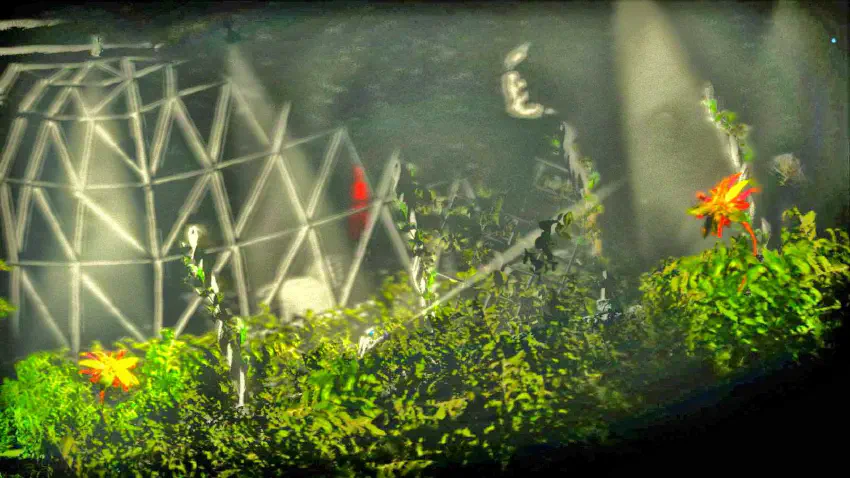
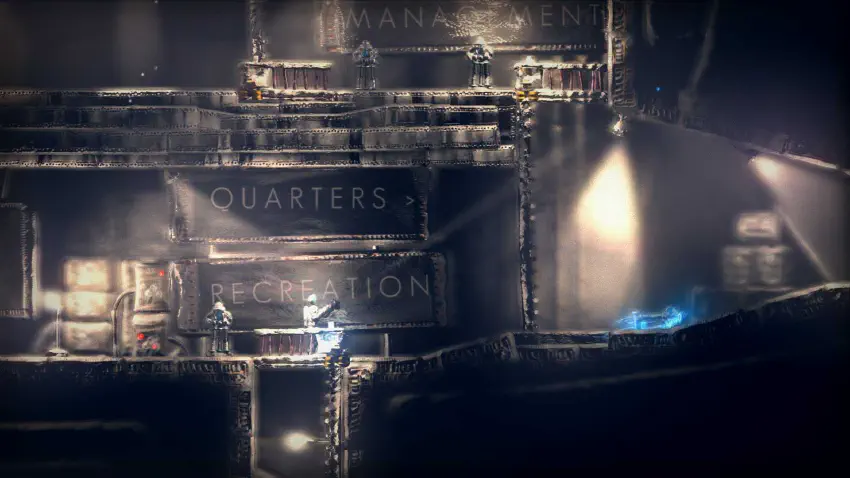
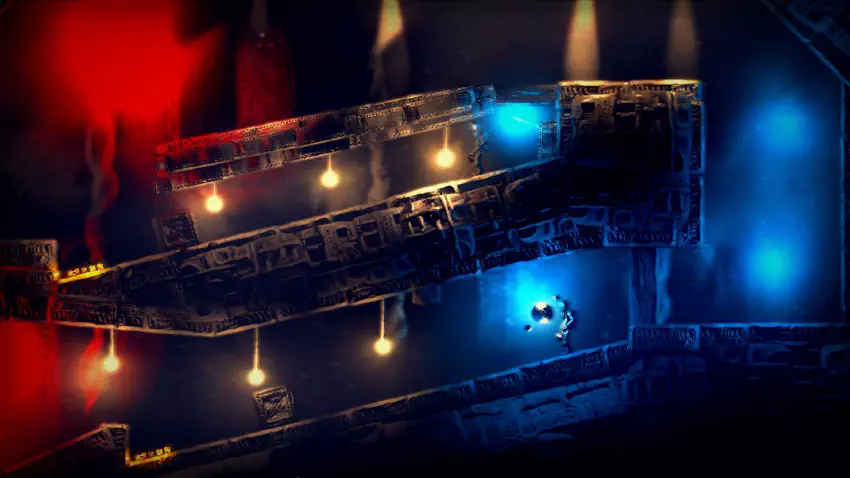
The game have a very great visuals. Dark and a bit spooky, but not in the way of horror games. It is designed to be just uncomfortable, just like Limbo and (presumably Inside, but I didn’t play it yet). But unlike Limbo, it rarely inputs pressure. You are always in a lonely and calm journey. It imprints the sense of loneliness, desolation, mystery and insanity.
The overall theme is a science fiction. During the game you face several dialogues and recordings of a technological discovery. It presents the theme in a more philosophical approach, similar to Talos Principle. However, due to the super short texts and obtuse ways to tell it, it does not feel very mind melting like Talos. It was a bit unsatisfying. A professional scientist would never write a log in such enigmatic way. It would be much clearer and direct to the point. This obtuse style of storytelling is typical on horror and mystery games, novels and movies. They rely on telling the audience so little that you do not understand the meaning way to the end. Despite it, I like the approach.
The game is short, which I would say that is a plus, because it gives the sense of completion and that it is not dragging you for hours for the sake of appearing more substantial.
I recommend this game. One of the best indies and best games overall I played this year so far.