



Português English

Blogs

A Skyrim Review A Decade Too Late feature
2023.03.09

A Skyrim Review A Decade Too Late

Ah, Skyrim, the game that we’ve all sunk countless hours into and have been rewarded with hundreds of dragons slain and hundreds of hours of gameplay. I mean, the game was released on 2011-11-11. It’s like Bethesda knew that we needed something to distract us from the impending doom of the Mayan calendar.

As a massive fan of fantasy RPGs, I picked up Skyrim on release day. Was one of my first purchases after getting a job in Rio de Janeiro. After playing for more than a hundred hours, I reviewed it but never finished it. My mage-thief AquaDiFiori was halfway on the main quest, and she was the leader of some of the factions. It was then that I realized that Skyrim is one of those games that you can sink an endless amount of hours into and still find new things to do and explore.

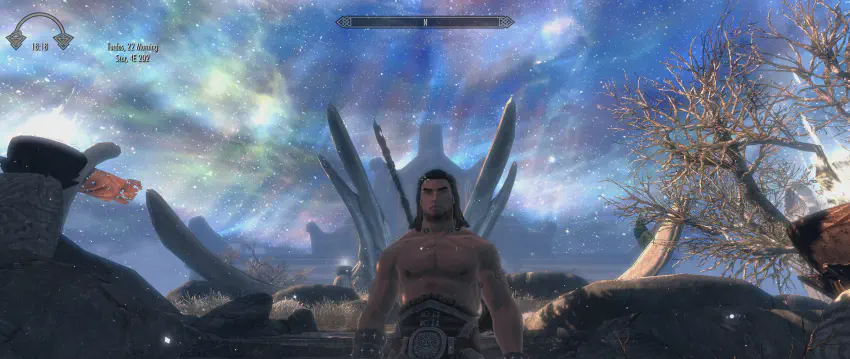
Recently, I decided to restart the game after several years, using various mods to fix some bugs and add more embellishments to the game. I played as a mage in the College of Winterhold, a thief in the Thieves Guild, an assassin of the Dark Brotherhood, and a warrior in the Companions, most with the same character, the female wood-elf UberCamelot. It was like a choose-your-own-adventure book, but with more dragons and less page flipping.

Skyrim is dead

One thing that frustrated me about Skyrim is the absence of a credits screen after the ending. What’s the point of defeating Alduin if you don’t get to bask in the glory of your victory while the credits roll? Instead, players can continue to explore the world. It’s like you’ve saved the world, but the world is still “I used to be an adventurer like you, then I took an arrow in the knee.”

Of course, one of the biggest downsides of the game is the frequent crashing. I get it, Skyrim is a huge and complex game, but wired bugs are one thing (for Bethesda Studios, it is a feature, not a bug), crashing after 10 years of patches is another completely. It’s still infuriating when you’ve spent a lot of time managing your inventory, crafting and enchanting items, and the game suddenly crashes. Quick save is your best friend in this game.

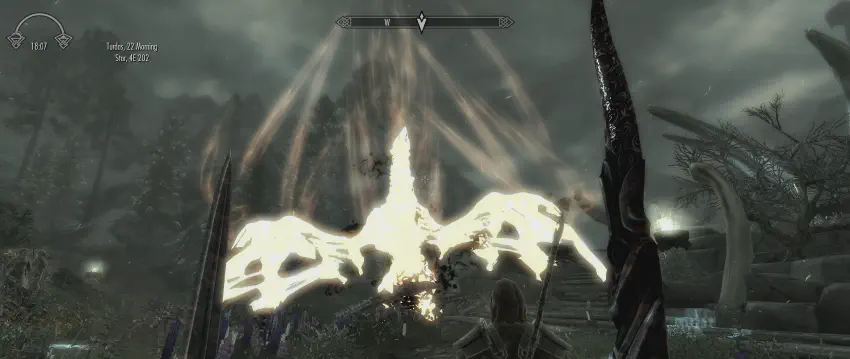
Despite the crashing, I enjoyed Skyrim very much. The game is incredibly immersive, with breathtaking scenery, atmospheric music, and realistic sound effects. The combat system is intuitive, and the ability to choose different skills and abilities for your character provides a lot of variety in gameplay. The world feels alive, with NPCs going about their daily routines, animals wandering around, and the occasional dragon swooping down from the sky. More than my memory served me. It’s like living in a high-fantasy version of a nature documentary.

Skyrim is dead

That being said, while Skyrim is an excellent game, I still think that The Witcher 3 is a better game. It has a more engaging storyline, better-developed characters, and a combat system that feels more refined. Side missions feel more meaningful and have a greater impact on the game’s story. But hey, that’s just my opinion. Don’t @ me.

In conclusion, Skyrim is an excellent game that just won’t Fus Ro Dah-way anytime soon! It’s been years since its original release and yet people are still shouting and modding. Keep selling well on every platform under the sun. It provides endless hours of entertainment.

My rating, after all these years, continues to be high. Finally, the Laat Dovahkiin will retire from the land of the Dovah. Let’s wait for the next scroll.

The final dovah is–over

Home Assistant and The Dawn of Smart Homes feature
2023.02.13

Home Assistant and The Dawn of Smart Homes

Smart homes are becoming increasingly popular as technology continues to advance and become more accessible. You can control various devices and appliances in your home through a single app or voice assistant. It can include lights, temperature control, security systems, and more.

You can control these lights through voice commands through platforms like Google Assistant or Amazon Alexa. With smart lights, you can easily set the mood in your home by adjusting the color, brightness, and temperature of the lights. You can also automate lighting by setting schedules or creating scenes, such as turning on the lights when you enter a room or dimming them for movie night. The typical sales pitch “Endless Possibilities” does apply here!

I started to transform my house into a Smart Home about a year ago and I’m loving it!

DIY

One of the most affordable and customizable options for building a smart home is to use Home Assistant with a Raspberry Pi. Home Assistant is an open-source platform that allows you to integrate and control various smart devices in your home. It is free and can be easily installed on a Raspberry Pi, making it accessible to people with a range of technical skill levels. Home Assistant supports a wide variety of smart lights, including those from popular brands like Philips.

One of the benefits of using Home Assistant with a Raspberry Pi is that it is free of paid service. All smart-device companies offer a paid subscription service to unlock some extra features. The Home Assistant community has hundreds of tips and tutorials to replicate them on your own. This means that you don’t have to worry about recurring subscription fees or being locked into a specific platform.

Unlike paid smart home services, particularly those in other countries, you can be confident that your private information and data are secure and not being monitored or accessed by anyone else. You have full control over your data and devices, and you can be sure that your security cameras, personal information, and other sensitive data are not being shared with any third parties. This level of privacy is crucial in today’s world where data privacy concerns are becoming more widespread. By choosing this DIY smart-home setup, you can enjoy the benefits of a connected home without worrying about the privacy implications of using a paid service.

Node-RED, included as a plugin, allows for even greater customization and automation in your smart home. You can create “flows” that automate various tasks, such as recording security video when motion is detected, sending notifications to your phone, or turning on the lights when you enter a room. This can make your smart home even more intelligent and responsive to your needs, freeing up time and effort that would otherwise be spent on manual tasks. The plugin provides a visual interface for building these automations, making it easy to set up and modify your flows, even if you have little to no programming experience. By incorporating Node-RED into your Home Assistant setup, you can take your smart home to the next level and make it truly your own.

I had to configure an online backup. Raspberry Pi has a history of failing, especially the micro-SD. It gives me peace of mind knowing that even if my Raspberry Pi fails, I can easily restore my Home Assistant setup without any hassle.

Wallet and Keys Free

Another great feature of a smart home is the ability to leave your keys and wallets behind when you leave the house. With smart locks and phone-based payment systems, you now can control access to your home and pay for purchases with just your phone. It can make life much more convenient, as you won’t need to carry a bulky keychain or wallet everywhere you go. It’s pocket freedom! Simply use your phone to unlock your front or garage door, and pay for your morning coffee – all without ever having to dig through your pockets or purse. The counterpart is the single point of failure: in case I lose my phone (or get robbed), I will have no money and no way to enter my house. :(

I did the right thing to start to automate my home a year back. Building a smart home with Home Assistant on a Raspberry Pi is a cost-effective and customizable option for people who want to control their home appliances and devices from one central location. A valid warning: it’s addictive to tweak each device or flow to fit your taste. Just take care of not getting into the rabbit hole!

Lutris: Games in Linux Easier than Ever feature
2023.01.26

Lutris: Games in Linux Easier than Ever

Lutris is an open-source gaming platform for Linux that allows users to easily install and manage Windows-only games without having to dual-boot or use a virtual machine. It works with a wide range of sources, including Steam, Epic Game Store, Origin, and Ubisoft.

Under the hood is Proton, the compatibility layer. It is not an emulator. Unlike traditional emulators, which run games in a virtual environment, Proton is a conversion layer that translates Windows system calls to Linux system calls. This allows Windows games to run natively on Linux without any performance loss. The result is that games run on Proton often perform just as well, or even better than they would on native OS. This is because it takes advantage of the performance optimizations and features of the Linux kernel, while also providing compatibility with Windows libraries and APIs. Proton also uses various performance tweaks and optimizations to improve the performance of games on Linux, and it is regularly updated with new features and bug fixes to support both recent AAA titles and older games.

I have been using Lutris on my daily Kubuntu system for the past 3 years and have had a great experience playing a wide range of games, from the latest blockbuster releases to older classic titles. From my experience, Lutris and Proton work exceptionally well and I have been able to successfully play most of the games without any problem. The process of installing and running games through Lutris is straightforward and user-friendly. The platform also provides a wide range of options for configuring and optimizing game performance, which is particularly useful for older or resource-intensive games.

Another great advantage of using Lutris is that it unifies all of your game libraries from different stores into a single interface. This eliminates the need to switch between different launchers or applications to access your games and makes it much easier to keep track of what you have installed and what you want to play next. You can browse and manage your entire collection of games from one place, regardless of where you purchased them from. If needed, Lutris launches the launcher automatically for you.

In addition to the convenience of having all of your games in one place, Lutris also provides a variety of tools and features that can enhance your gaming experience. For example, the platform allows you to create custom game configurations and launch options, manage your game saves, and keep track of which games you have completed. With Lutris, you have all of the tools you need to manage your gaming library and get the most out of your games.

Valve, the company behind Steam, has also made a significant contribution to the development of Linux gaming. They have invested a lot in developing Proton, which is now a key component of Lutris, and also the Steam Deck, a handheld gaming console that runs on Linux. This investment by Valve demonstrates a strong commitment to the Linux gaming community and it’s great to see that the gaming experience on Linux is getting better and better.

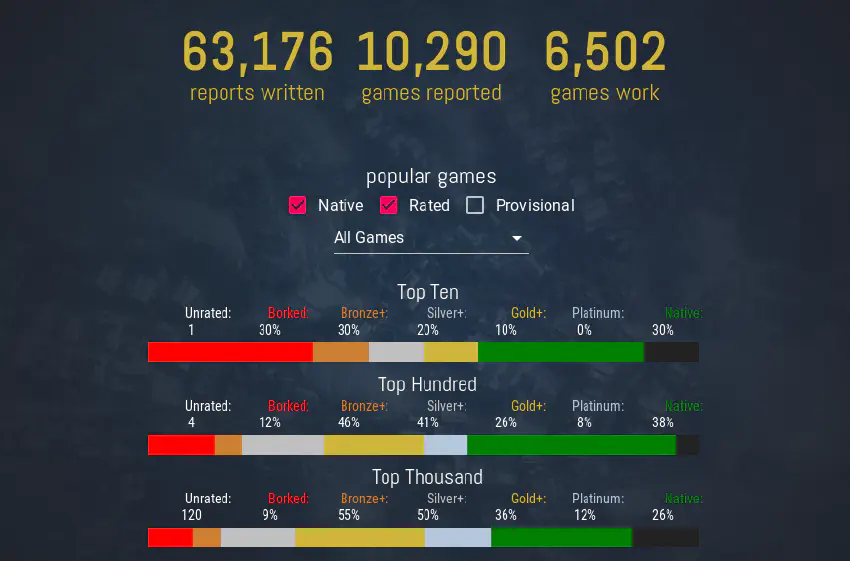
Note: You can check the list of all games that that are working fine in ProtonDB and Lutris DB. The most problematic games are those that require some anti-cheat feature, because they are tailored for Windows and use intrinsic techniques.

Lutris and Proton are powerful tools that provide a seamless gaming experience on Linux. The platform is user-friendly, easy to configure, and constantly updated to support new games and features. Have fun!

Proton db

Books List 2022 feature
2022.12.31

Books List 2022

Every year I try to compile a list of games, books, and movies I experienced. For the complete list, check the Ratings. Here we go (sorted by rating)!

I continue reading (mostly listening to audiobook versions, in fact) almost every day for the past few years. It’s in my daily routine when I walk the dogs. It’s a very different proposition from laying down and dedicating some time to read them. I have an urge for a secondary task when I am performing a no-brainer routine, such as… walking the dogs. Otherwise, I feel like wasting my time by walking and not thinking.

This is the list of this year’s books that I ingested. These lists are -definitively- not comprehensive ones. Since I always forget to update my GoodReads personal records or write about them on this blog, they are just the ones I remember. I will edit this post in case I remember other entries.

This year I’ve already compiled a mid-term list back in July, so it’s just the books from the second semester.

Fiction

  • The Silver Ships (9★★★★★★★★★): Great recommendation from Steve Gibson in the Security Now podcast. The author tells science fiction stories with rich details about the character and ordinary tasks. The protagonist is clever, to say the least.
  • Libre (7★★★★★★★): The second book captures a character trait I do not like: constant winner. Alex Racine faces rare and extremely low-odd events and surpasses them daily. At some point, I started to care less and less about him because I knew very little was at stake. The higher note is the rising of artificial intelligence characters.
  • Méridien (7★★★★★★★): 3rd book. SADEs (the artificial intelligence characters) shine. The main character, again, is too much powerful/lucky. The timeline jumped several years in the future, giving a fresh look for each character.

Non Fiction

  • Mindset (5★★★★★): One could summarize Mindset into a single slide. People either have a fixed mindset (believe people do not change, things are what they are) or a growth mindset (everything is changing and evolving, including ourselves). It’s interesting, but the book is self-indulging (a common trait for self-help books). Dweck repeats her mantra over and over, exploring her theory in a variety of scenarios. Most of them are ad hoc: she justifies the known past as the mindset of the people involved was THE reason why things happened as they did.

Some books for the next year

  • Steve Jobs by Walter Issacson
  • How Democracies Die by Steven Levitsky, Daniel Ziblatt
  • The Law by Frederic Bastiat
  • Essays on Political Economy by Frederic Bastiat
  • Quiet by Susan Cain
  • Thinking Fast and Slow by Daniel Kadneman
  • Doomsday Book by Connie Willis
  • Sharp Objects by Gillian Flynn
  • Silver Ships 5-10 by SH Jucha
  • Mistborn 3-4 by Brandon Sanderson

For more books, you can check my online read list on GoodReads.

Game List 2022 feature
2022.12.31

Game List 2022

Every year I try to compile a list of games, books, and movies I experienced. For the complete list, check the Ratings. Here we go (sorted alphabetically)!

This year my game library is over 1000 games. 1/3 I’ve never touched it. 1/3 I’ve barely played. So I can stop buying games for a while and still have a lot of fun.

Finished

  • 3 out of 10 Season 2 (7★★★★★★★): the same as the first season. Funny and awkward.
  • A Plague Tale: Innocence (8★★★★★★★★): it’s a stealth game with beautiful production. Finally, played the whole thing. The supernatural mixes with religion, knights, and kings.
  • A Total War Saga: TROY (8★★★★★★★★): one of the Epic Store exclusives (for a time), it impressed me. I finished my first campaign, playing the Amazons. It takes so much that I prefer to play another thing. But it was good. The siege mechanism drags the game progress (it is accurate historically, but it does not translate well into gameplay).
  • Amnesia: Rebirth (5★★★★★): I did not like either the game old mechanics or the story.
  • Before Your Eyes (8★★★★★★★★): a sad and emotional story of a boy. The unique mechanism of blinking in front of the camera instead of using the mouse is gimmicky but works fine in the setting. It almost made me cry.
  • Blair Witch (7★★★★★★★): did not care much about the lore, but it’s a nice horror game. The dog is an enjoyable mechanic, and we get quite attached to him.
  • Borderlands 3 (5★★★★★): Not fun. I would like to tell you that. The humor is repetitive from previous entries, and the gameplay is also derivative.
  • Crying Suns (7★★★★★★★): very similar to FTL, with a delightful story and context.
  • Elex (6★★★★★★): praised by Mortismal Gaming as being a clunky but very enjoyable RPG, and I agree. The story is unbelievable, and the character progression is steep, to say the least. Unlike Morten’s review, I do not recommend it, despite the recent Elex 2 release.
  • Grand Theft Auto V (8★★★★★★★★): years after the release, I started to play when Epic Game Store gave it for free. I’ve never bothered to play the multiplayer MMO, just the main story. It’s a technical marvel to use 3 protagonists in different places in the city. It’s far better than previous titles and full of hilarious moments (both scripted and spontaneous).
  • If On A Winter's Night, Four Travelers (6★★★★★★): a small 2-hour long game with SO much story and ambiance.
  • Maneater (8★★★★★★★★): a mockumentary about sharks. The player controls the sharks, and the narrator always follows you. It was a surprise for me.
  • Monster Train (6★★★★★★): very much like a board/card game made digital (no coincidence that the board game community loves it). Rogue-like go until you die makes every match a life-or-death dire. I finished one time at least! But the core loop asks for more.
  • Nex Machina: Death Machine (7★★★★★★★): shoot-them-all frantic gameplay. It is difficult. I can imagine fans speedrunning and replaying for all the achievements.
  • Northgard (6★★★★★★): Steam has offered for free for a single weekend. I manage to play and play to the very end. I was expecting an open sim, but it’s more like a WarCraft in rails. Each scenario is a very narrow puzzle.
  • Q.U.B.E. 2 (7★★★★★★★): puzzle very similar to the Portal series. The story is mysterious with a nice twist.
  • Middle-earth: Shadow of War (6★★★★★★): My saved game was corrupted by 2019, but due to the imminent debut of the Rings of Power TV show, I managed to play it all over again. This time, to the end. Very average. Too many systems that are not very relevant in the end.
  • Sherlock Holmes: Crimes & Punishments (8★★★★★★★★): the best game in the series. 6 cases with somewhat similar mechanics and styles.
  • Star Wars Jedi Fallen Order: got in Amazon’s Gaming free January kit and I got very curious. It impressed me quite a lot. I even tried to get all possible achievements. In the end, you feel a very powerful Jedi. The story is cliché.
  • Star Wars: Squadrons (7★★★★★★★): flying a ship from the Star Wars universe was always a fun proposition.
  • The Quiet Sleep (8★★★★★★★★): in this weird indie game, you play a guy’s mind during 3 life simulation scenarios. Decisions will generate stress, anxiety, and happiness, and the player has to chain them into the following process or decision.
  • Untitled Goose Game (7★★★★★★★): playing in two, with my wife. It’s a little puzzle game. Not all puzzles are obvious, but it was fun to explore the possibilities of being an annoying goose. It reminded us of our little dogs and the times they are nasty little creatures causing havoc around.

About to finish:

  • Beyond: Two Souls (8★★★★★★★★): start to play this story-driven with my wife. I bet it will be finished by the next couple of weeks. Heavy Rain probably coming next.

Not finished yet (for one reason or another)

Many projects barely begun. Installed to test, but mostly in limbo—WIP or collecting dust. Unfinished tales of exploration and hesitation.

  • Assassin’s Creed 3 (5★★★★★): it’s a big cut scene with some on-rails gameplay. Hated so far. :( Uninstalled and will hardly get into it again.
  • Astrologaster (8★★★★★★★★): indie small game. Crazy humor. I liked it very much so far.
  • Black Mesa (8★★★★★★★★): the official/unofficial Half-Life 1 remake. The original one I did not play at the time. This remake is superb! After finally playing Half-Life 2 (8★★★★★★★★) until the end of last year, I was curious to check what all the fuss was about HF1.
  • Cloudpunk (7★★★★★★★): weird visuals and relaxing gameplay. You are a taxi driver in a special city.
  • Deus Ex: Mankind Divided (7★★★★★★★): liked the first title, Deus Ex: Human Revolution (8★★★★★★★★), but this one is a far inferior game. The story is not nice and the gameplay is not fun so far.
  • Doki Doki Literature Club: not my style, but I heard so many good things about it that I’m intrigued. Played for just a handful of minutes.
  • Ghostrunner (7★★★★★★★): 3D puzzle game action game. Think about 3D Super Meat Boy in first-person. The control scheme is odd, but the visuals are amazing.
  • Gris (8★★★★★★★★): beautiful first level.
  • Heaven’s Vault (7★★★★★★★): highly anticipated game, played a bit and liked the story so far. As far I can tell, there is space for multiple run-throughs to explore all possible branches (not sure if I would do it tough).
  • Observation (7★★★★★★★): excellent storytelling, despite the clunky controls. While trying to install another game, I remove it to free up some space. After a couple of months, It’s going to be difficult to redo the narrative.
  • Supraland (8★★★★★★★★): from nowhere, this game is, to my surprise, harder and much longer than I anticipated. Still, I’m loving the sarcastic tone and the bucketload of jokes.
  • The Stillness of the Wind: installed.
  • Thronebreaker (8★★★★★★★★): a great RPG but using the core mechanics of the Gwent card game! Unique premise and a VERY fun game.
  • Unravel Two (7★★★★★★★): still to finish with my wife. She struggles to use the joystick, but this game is quite forgiving, due to the slow pace. The light story allows infrequent plays.
  • while True: learn() (8★★★★★★★★): logic programming puzzles. Amazingly fun and challenging for a programmer. The special bonuses for optimized solutions request multiple plays for each scenario.
  • Wilmot s Warehouse: it works. It’s all that I can tell so far.
  • XII: installed, played 2 levels. A first-person shooter with a unique visual comics-like style but old controls.

Not finished yet (still from previous years)

Yet, there are some games that I did not quit definitively, but they are still to be played (therefore, not yet fully rated). A few are installed even still.

  • Baba Is You (7★★★★★★★): played some levels. To the second or third “world”, if I remember. SUPER clever.
  • Shadow Tactics: Blades of the Shogun (8★★★★★★★★): I liked the thinking of this game. It’s definitively one that I will try to complete sooner than later.
  • Superhot Mind Control Delete (7★★★★★★★): played several levels already, yet to finish.
  • Surviving Mars (7★★★★★★★): played a couple of times but never could complete a single level. It’s dry.
  • The Pillars of the Earth: loved the book. I barely started the game, so maybe it should not be here.
  • This War of Mine (8★★★★★★★★): I’m far in my third play-through, but I’m still to survive and see the game credits.

Continuous playing

I play them eventually. Most of them, are strategy games.

  • Cities: Skylines (8★★★★★★★★): my friend mentioned that he has lost hours and hours designing his hometown. I reinstalled it and started to lose hours and hours too! :P
  • Democracy 4 (8★★★★★★★★): it was special to play it while running for congress! Great game and a formidable educational tool. I have some contact with the developer, Cliff Harris.
  • Endless Legend (7★★★★★★★): I install and play from time to time. The region/country approach to territory instead of individual hexagons is nice.
  • Hidden Folks (7★★★★★★★): Where is Wally/Waldo?-like is a success with small kids and non-gamers alike.
  • Overcooked 2 (8★★★★★★★★): my family loved it, and I’m trying to play the campaign with my wife.
  • RimWorld (8★★★★★★★★): MUCH more complex than Prison Architect, offered a great variety of procedural content. I did not finish even a single play-through, but it’s really special. There is a dedicated fan base.
  • Rome: Total War (8★★★★★★★★): I played a lot last year. But it’s quite a long game. Once I finish it once, I might close it once and for all. The Troy is heavier but ultimately better in every aspect.
  • Scythe (9★★★★★★★★★): the award-winning board game that I still have to give a beginning-to-end match.
  • Skyrim (9★★★★★★★★★): Because I’ve never finished the game, I was always tempted to replay it. After watching some hilarious videos of The Spiffing Brit channel exploiting its mechanics, I was convinced to restart. I installed a dozen mods to enhance visuals and UI. It’s much better.
  • Stellaris (7★★★★★★★): slow-paced super broad space strategy. The sense of exploration is still amazing.
  • Terraforming Mars (6★★★★★★): an award-winning board game that I played a couple of matches solo. Did not click on me, but I will still give it another try, maybe multiplayer.
  • Ticket to Ride (9★★★★★★★★★): one game that I play online with family and friends. My wife and I love it. Always a success.

Next games on my radar

Finally, here is a list of games that I already have in my collection that I plan to play in the next months.

  • Assassin’s Creed Syndicate: hope to be better than the 3.
  • Battlefield V (9★★★★★★★★★): I played B1 last year and loved it. Now it’s time to play the next in the line.
  • Ghost of a Tale (7★★★★★★★): I’ve followed the development process for quite some time because it was made using Unity3D. I never played it, and it is now in my collection. It looks adorable.
  • Heavy Rain: I will play this critically acclaimed story-driven game from Quantic Dream with my wife.
  • Hitman: I’ve never finished Contracts, but just because I was obsessed with being perfect. I hope to play more relaxed this one.
  • Shadow of the Tomb Raider (6★★★★★★): Like Battlefield 5 above, it’s the next Lara adventure to experience.
  • We Are There Together: I bought to play with my wife using the family feature on Steam (she shares all my games). However, it is not included in the Play Together, so I am required to buy it twice. :/ Maybe trying to convince another soul to play with me.
  • XCOM2: XCOM 2 received praises in the past few years. It’s time to take a look at it.
Bruno MASSA