
Português English

Blogs

Watch Dogs 2 feature
2021.09.13

Watch Dogs 2

What a surprise! After playing several Ubisoft open-world games lately, I was expecting another result of a generic and repetitive side quest generator with a superficial storyline over it.

I was a bit reluctant to start WD2. I read that the original title was overpromised and under-delivered. The second one flew on my radar at the time. Recently I got it through the Epic free game initiative. Then I read some reviews and comments from the launch time and there were good ones. So I decided to check it out. Not without flaws, I enjoyed the time, the story, and the gameplay.

Likable Protagonist

Far Cry 3 presented the very iconic and infinite memerable villain Vaas Montenegro. However, the Ubisoft writing team struggles to create memorable protagonists. I cannot name a single great protagonist in Far Cry and most Assassin’s Creed (old and new entries) are plain boring. AC3’s Ezio Salvatore da Firenze is the top of mind. AS Odyssey’s Kassandra was nice, despite being put in a split role with her unnecessary male version Alexios.

The player spends hours living the life of another person that she/he cares so little about. It’s sad really.
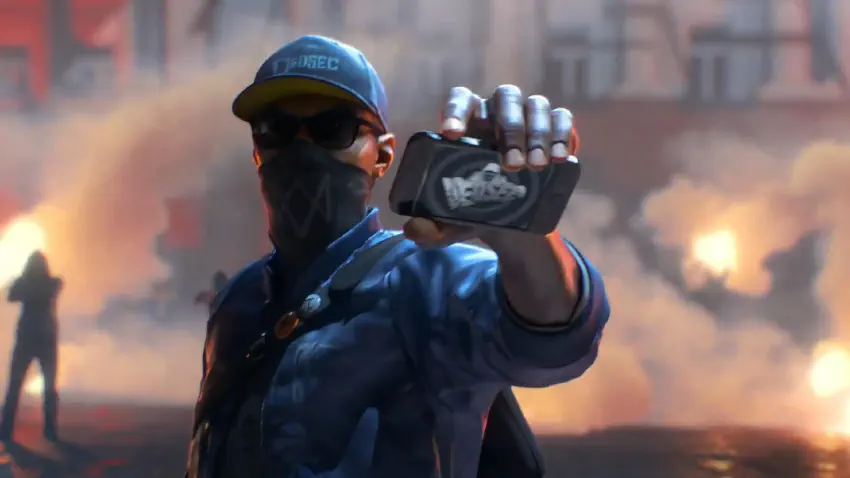
Watch dogs 2 marcus.jpg

Marcus Holloway is a new entry on the likable protagonist list. Optimist, clever and lighthearted. His motivations seem reasonable and believable. However, there is a cognitive dissonance playing Marcus as an armed gangster, shooting at police and mob armies. From start to finish, all cutscenes present him, as well the other members of the DedSec crew, as non-violent watchdogs. People that fight to preserve individual liberties and respect life and diversity. Using machine guns to kill everybody on site feels wrong. I tried to play as much as possible in the way I understood the character: low profile, clever hacker.

For the rest of the crew, it’s a mixed bag. The only one that will definitively stick in my mind is the masked engineer Wrench. Horatio, the guy that works on Goog… Nudle becomes relevant. The rest is the rest.

For villains and NPCs, none are worth mentioning. The main villain, Dušan, is both an idiot and annoying.

References

The hacker theme is presented as the usual Hollywood cliché. Type furiously into the notebook and any bank account in the world is yours!

However, the overall universe is set using several references to popular culture. Movies, music, and video games are often mentioned by characters. Some are more obscure, but most of the time these references are more common sense. For those that know them, they are quite fun. For those that do not, is an exotic flavor.

Some references are less subtle: There is a search engine and maps company called Nudle. A rocket launcher Galilei commanded by a millionaire much like SpaceX. I linked the main villain company, Blume, as Microsoft, but it’s my own thing.

Watch Dogs 2 does not take the story and theme too seriously. There is even a good dose of self-mockery about being a hacker/programmer. It’s not like Far Cry’s Blood Dragon over-the-topness. WD2 translates complex problems into smaller bites to make them more accessible and fun to a broad audience.
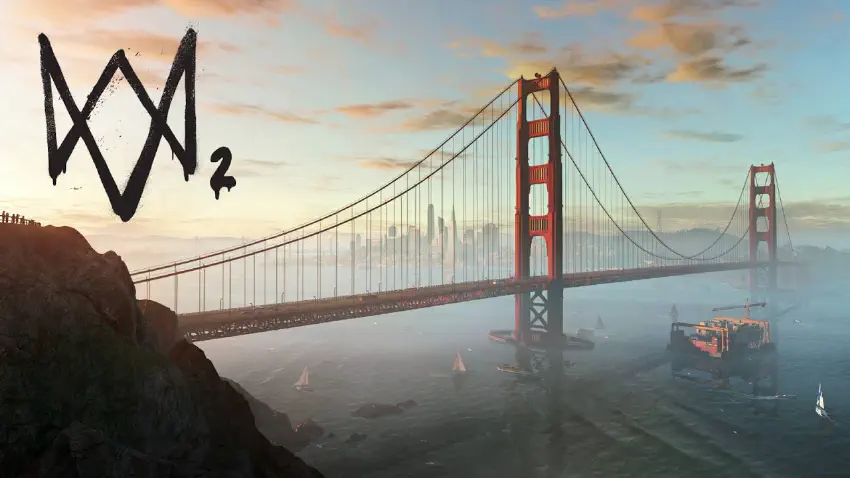
Golden gate.jpg

Gameplay

As I said before, it is possible to be Rambo and shoot everybody. Like GTA, you will attract police attention and will die, respawn and try again. But I feel that is not the way it’s meant to be played™. Harder, but more satisfying, is avoiding direct conflict and using gadgets and powers to sneak. The same could be said for old Assassin’s Creed games (the new ones embrace direct combat as pillars).

The hacking abilities are more useful for small interventions, like distracting guards, than creating mayhem. Hacking citizens’ phones in the streets are fun for 10 minutes, then becomes quite useless. Event robbing their bank accounts, money in general, becomes irrelevant mid-game, after upgrading Marcus’ drones.

Most puzzles are repetitive, but fun mini-game.

In the end, the core mechanics are solid. Open-world games tend to be repetitive, but WD2 scrambles the same basic mechanics offering variety.
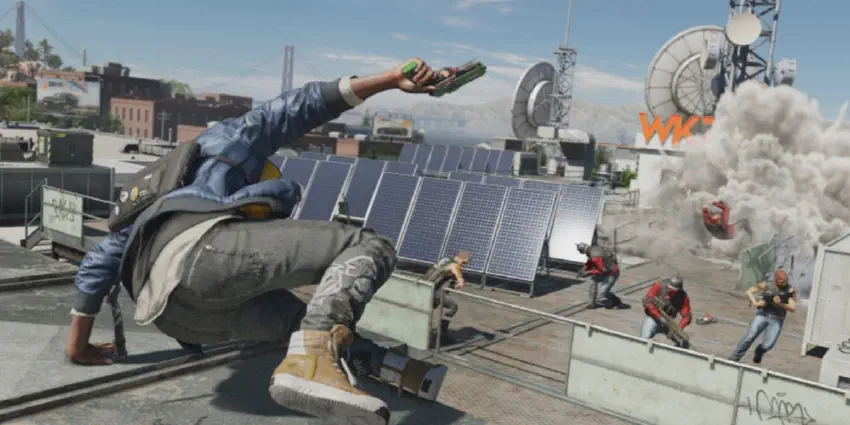
Watch dogs 2 4.webp

My Rating: 8★★★★★★★★
Metacritic: 75
Google Cloud Architect Certification feature
2021.09.05

Google Cloud Architect Certification

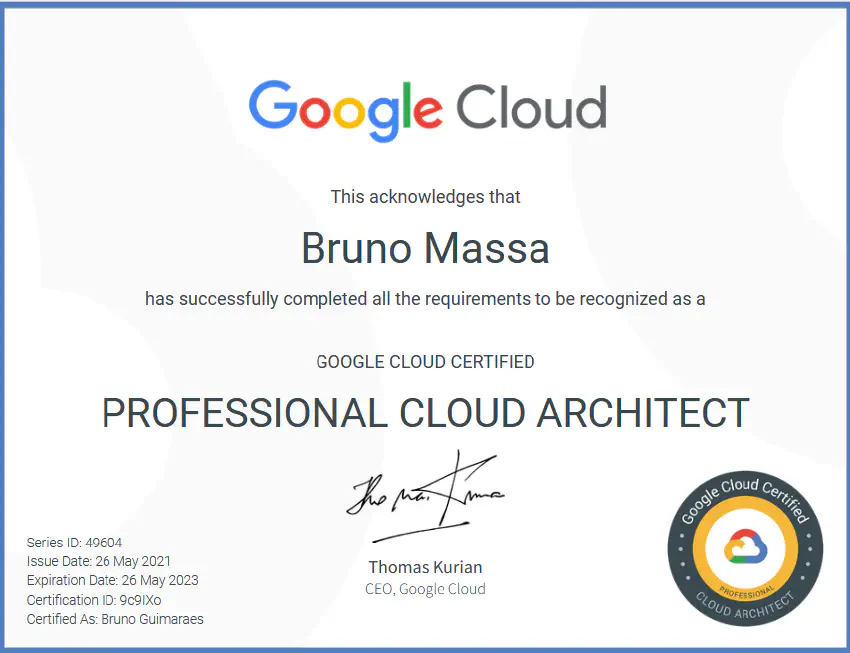
Less than a couple of months after I got certified as a Project Manager, I decided to invest in an area that I was not fully confident that I know the stuff: defining cloud architecture. I started to create, develop and manage cloud systems in just the past 5 years or so, and it evolved super rapidly.

So, applying for a such certification would require extra study on my part. There were areas that I definitively do not grasp, such as networking and many Kubernetes corners. I decided to go with my beloved Coursera. I did a couple of free and paid courses there and I love it. Also, it which was the official training platform for Google products and services. Google itself design the courses and its employees that teach them. So there is some comfort.

The course is very practical. They provide a demo but real user to allow students to act in a Google Cloud environment for real. So one interacts, creates, updates, and deletes real things. It’s a major factor. Hands-on baby!

I went to the examination and was much more relaxed. They were as much as professional as the PMI guys but more relaxed and humane. I passed.

I learned a lot for sure. It will help me in future and current projects. Even being Google Cloud-focused, it addressed many of the issues of a generic cloud architect in any provider.

I can assure you I can handle the job. From computing, serverless, storage, and, yes, networking, I’m pretty confident I can design a better pretty cost-efficient solution than before. In the evolving cloud business, as long I keep updated, it’s a new passion that I am so excited about.

Google cloud architect certification.png

Rating Art feature
2021.09.03

Rating Art

Rating things is a real art. Especially if we are rating art. Not much thought is put on it; eventually things start to get complicated and ambiguous.

Time

Also cultural references also change. What was good 100 years ago might simply be unacceptable nowadays. There are plenty of movies, sculptures, paintings and songs that portrait racism, misogyny or prejudice that were normal at the time. It’s complicate to reevaluate them using our modern mental framework.

Also, our own taste changing with time. Things that were cool when we were young might embarrassing years later. #cringe

Technology

Some technological improvements make it change our quality perspective. A silent or black-and-white movie, a radio quality song recording, an Atari Pong. But today, it’s hard sell to have such limitation in a modern piece of art.

Sometimes, these technological changes make plainly impossible to appreciate the art later on. For video games it’s particularly affected, since the medium in which it is consumed is part of the experience. Virtual Boy headaches during hours and hours of playtime were part of the nostalgia, but how to compare with a modern XR game if the hardware itself is hard to find and make it work?

Single Fixed Scale

Finally, we have to reduce all the rich details into a numeric scale.

I prefer an infinite positive scale, that always grows with new titles, would be better. So Pong would never be in the same league as a modern AAA 3D adventure story-driven game. But at the same time, one could honestly appreciate an old movie almost the same as flashy new one.

So having a single fixed scale, from 1-5, 0-10, percentage, or even the super weird American F-A concept, is an easier way to deal things. Almost everyone uses this in some shape or form.

My take

There are much to discuss.

At least for now, I’m going to simplify a bit my ratings. I use a 0-10 scale, with .5 decimals. There is no need for these decimal point. An 0-10 scale is enough to separate good from bad. Numerically, 9.4 is better than 9.3. But in practice, it most convey the information that is an amazing game/movie/book, not that one is better than the other. The details I expect to point are a qualitative analysis in each review.

Also, using half-points in practice doubles the range. It’s, in fact, a 20 point scale. No need for such granularity.

Updating all these past ratings with decimal points, rounding them up or down, depending each case.

One might notice that I’ve never used the 1-3 ratings and barely used bellow 6. It’s not a problem with the scale per se. It’s more about the selection process that occur before consuming a game or movie. I try to focus on award winning, previously mentioned and commented by someone else before. I might eventually rethink this scale to englobe all bellow threshold in a single category and focus on the above threshold scale.

This way I tend to consume only reasonably good products and, therefore, only set reasonably good ratings! Good for me, if you ask.

Pandemic (The Game) feature
2021.09.02

Pandemic (The Game)

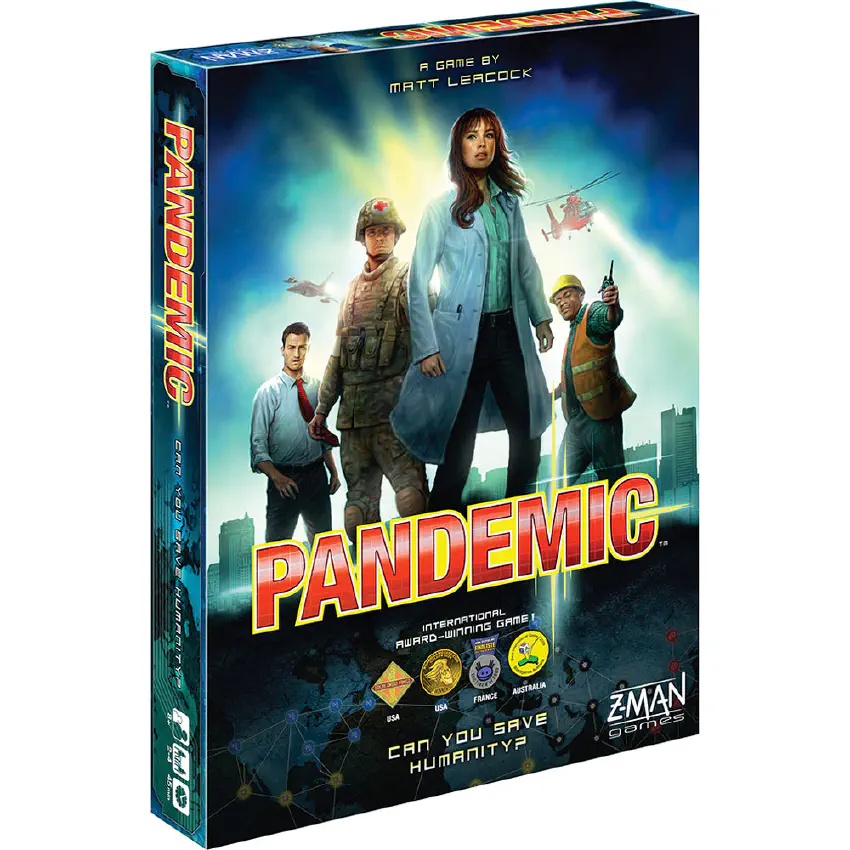
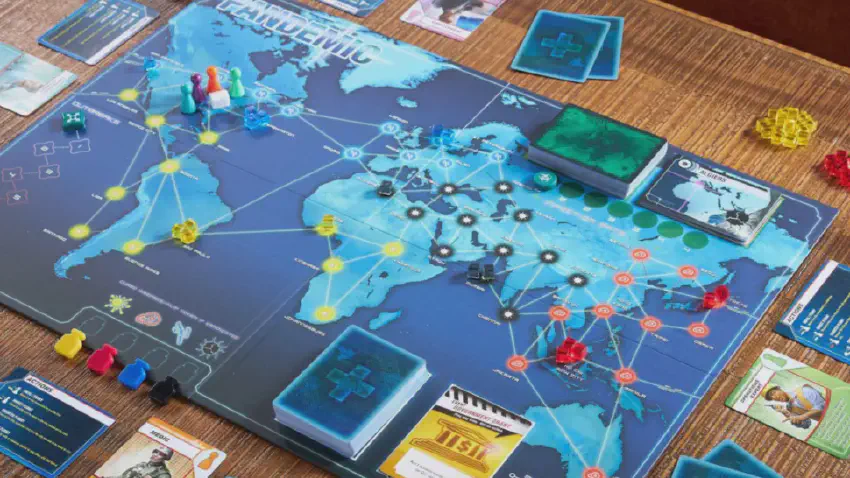
Since I started to follow the rising popularity of board games, 15 years ago, one game the games that was recurrently recommended is Pandemic, designed by Matt Leacock. When I finally had the chance to buy a game from US, it was one of the 4 games I’ve got.

At the prestigious BoardGameGeek top ranked games, Pandemic figured in the top 10 games for quite some time. Now the Legacy version is currently in the top 3.

Tgtg ho17 zm7101.jpg

The main attractive at the time is the idea of a cooperative game. All players fight against the game itself. On video games its common, but was kinda a novelty for tabletop games. It plays well with 2 to 5 people and you can even play with children, because it’s all information is open so you can help the decisions for each player. Also because of been cooperative, it’s very easy to teach other people, because you can teach and repeat the rules while playing.

The let’s Save the World from a Pandemic theme was already fun, but now it has an almost historical and technical value to it. The game popularity spawned several expansions, spin offs and the most successful Legacy series, the campaign story-drive version.

T b8z ghm xw48p2 qjyf rr j4 s 970 80.jpg.webp

It’s my most played board game to date. For a reason.

My Rating: 10★★★★★★★★★★
Books From 2021 (So Far) feature
2021.08.15

Books From 2021 (So Far)

I continue to read (listen in fact) almost every day for the past years. It’s in my daily routine when I walk the dogs. It’s a very different proposition from laying down and dedicate some time to read them. I have an urge of a secondary task when I am performing a no-brainier routine, just as.. walking the dogs. Otherwise, I just feel wasting my time my just walking and no thinking.

This is the list of this year’s books that I ingested. Later I present a list of books from the previous years that did not mention before. These lists are -definitively- not comprehensive ones. Since I’m not updating my GoodReads personal records nor writing about them in this blog, they are just the ones I remembered. Eventually I might edit this post in case I remember other entries.

  1. Remote (10★★★★★★★★★★): I’ve read this book few years back and I’m planning to do an annual reading of this book, along with the other Jason Fried books. They are mind opener, very opinionative and thought-provoking. Yet so elegant and simple. It points advantages and disadvantages of remote working, some misconceptions and prejudices. During the radical change of life during the pandemic, it was still valid (it was published in 2013)
  2. Foundation (10★★★★★★★★★★): a SCI-FI classic that was always in my “want to read” list. Since I’ve heard that it’s going to become a TV Show from Amazon Prime, it climbed up to the top of my next books. And it did not disappointed. A superb novel that deals with the idea of a guy that can forsee the future and plan each step to change it.
  3. Parable of the Sower (9★★★★★★★★★): a 5 stars recommendation from The Wertzone, it was amazing and rich as I was told. The next book, Parable of the Talents (8★★★★★★★★), also recommended, will be read soon.
  4. Torto Arado (7★★★★★★★): this Brazilian first time author conquered most of national and international Portuguese awards. Tells a story of two girls from the almost deserted region in Brazil, fighting against poverty, misogyny and happiness.
  5. 21 Lessons for the 21st Century (8★★★★★★★★): another hit from the same author of Sapiens, focusing on some pressing issues of the contemporary times, like genetics, robotics and artificial intelligence.
  6. Shaping the Future of the Fourth Industrial Revolution (8★★★★★★★★): the same vein of the previous book, analyzing global issues, from the executive chairman of the World Economic Forum. I think I liked more than 21 Lessons
  7. The Final Empire (7★★★★★★★): in an universe that magic spells can be cast by consuming metals, Sanderson starts the sprawling saga with an epic heist.
  8. Letters From An Astrophysicist (7★★★★★★★): Tyson is a well known scientist and his polite, yet firm, way to respond questions in TV shows is also presented in this collection of letters received by fans and not-fans alike. He talks a little bit of everything: science methods, physics, astrophysics and, but also about astrology and religion.
  9. Project Hail Mary (7★★★★★★★): The Martian was a mega hit. As a movie adaptation, it was the most viewed and profitable project from the acclaimed direction Ridley Scott, which includes Gladiator, Blade Runner and Alien. It takes the same Weir’ nerdy writing style, again with a very lonely protagonist and the roller coaster plot. This time, I have big doubts that a film adaptation would be a similar success, due to the complex narrative and scope.
  10. Foundation and Empire (6★★★★★★): the second book have two different stories and is less interesting due to the lack of the main characters from the first book. Of course, it takes places centuries after the first book’ events. The new characters are all nice, but the Hari Seldon previsions becomes both too mystical and precise to my taste.
  11. The Miracle Morning (4★★★★): I heard about it while listening the Jeff Goins podcast interviewing the author. He mentioned coming to Brazil to advertise his new book and discovering a huge fan base. So why not try. I found a very obnoxious self-help book about waking up early, do some exercises, meditate and suddenly one would become 999% more productive.

From previous years but not yet mentioned (and worth mention)

  1. It Doesn't Have to Be Crazy at Work (10★★★★★★★★★★): Like Remote, it’s worth to re read periodically.
  2. The Name of the Wind (10★★★★★★★★★★): Kvothe’s early stories are fascinating. The universe blends Harry Potter with Lord of the Ring, with a very likable cast of characters.
  3. The Hate U Give (8★★★★★★★★): read years before the Black Lives Matter movement, is still a valid story about racism and police brutality. I’m yet to see the movie adaptation.
  4. On Writing: A Memoir of the Craft (7★★★★★★★)
  5. Judas Unchained (8★★★★★★★★): the second book, just after the events of Pandora’s Star. Breath holding.
  6. How To Write 50,000 Words In 30 Days, and survive to tell your story! (7★★★★★★★): dogmatic but can serve as a powerful inspiration.
  7. Artemis (7★★★★★★★): first Mars, now the Moon. This sci-fi story is well grounded in science and the protagonist is tenacious
  8. The Wise Man’s Fear (5★★★★★): The Name of the Wind’s protagonist transformed from a poor underdog in the first movie to an almighty demigod. There are basically no impossible obstacles that are solved a couple later.

For more books, you can check my online read list on GoodReads.

Bruno MASSA